

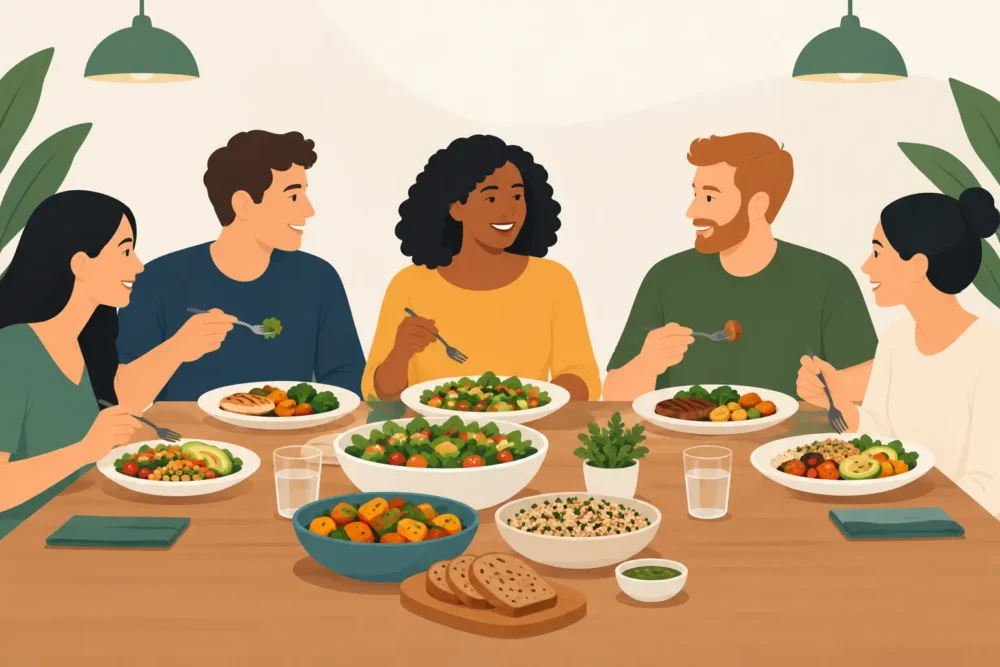
A great menu for vegetarian omnivore groups should never feel like two separate meals happening at the same table. After a day on Sedona’s trails, at a birthday dinner, or during a long-overdue catch-up over cocktails, everyone wants the same thing: food that feels generous, considered, and genuinely worth ordering.
The answer is not to make every dish vegetarian, nor is it to offer one token vegetable plate beside a lineup of meat-forward classics. The best group menus create overlap. They lead with shareable dishes everyone can enjoy, offer satisfying mains in more than one direction, and treat dietary preferences as part of the experience rather than a complication.
Start With Food Everyone Wants to Share
The first few dishes on the table set the tone. If vegetarians have to wait while everyone else digs into wings, sliders, or charcuterie, the group meal has already split into categories. Shared starters should give every guest an easy way in.
Think crisp salads with a flavorful dressing served on the side, warm dips with vegetables and bread, hand-cut fries with chef-driven sauces, roasted seasonal vegetables, or a composed plate of grilled bread, spreads, and bright toppings. These are not consolation snacks. Done well, they are the dishes people reach across the table for twice.
A smart menu includes at least a few starters that are vegetarian by design, not merely modified. That distinction matters. A dish built around produce, texture, spice, acidity, and a confident sauce has its own identity. A dish that simply has the bacon removed can feel unfinished.
There is room for more indulgent shared plates, too. The goal is balance. A table might order a rich, meat-forward appetizer alongside a vibrant vegetarian starter, then add fries or a fresh salad to round things out. That gives omnivores choice without asking vegetarian guests to settle for side dishes.
Build Mains Around Choice, Not Compromise
The strongest menu for vegetarian omnivore groups gives each guest a real entrée decision. A vegetarian diner should be able to choose between a hearty grain or vegetable-forward bowl, an inventive sandwich, a substantial salad, or a plant-based version of a familiar comfort-food favorite. An omnivore should have the same breadth, with burgers, chicken, seafood, or other proteins prepared with equal attention.
This is where modern American diner cooking shines. Familiar formats are naturally flexible. A burger can be offered with a plant-based patty or a chef-crafted vegetable alternative. A bowl can start with grains, greens, roasted vegetables, herbs, and sauce, then allow guests to add chicken, salmon, or another protein. A composed salad can stand on its own or become more substantial with a protein choice.
The key is to make the vegetarian version feel complete before any add-on is considered. A bowl should not read as a pile of rice that becomes dinner only after chicken is added. It needs contrast: something roasted, something crisp, something creamy or tangy, and a sauce that pulls the plate together.
There is a practical reason this approach works for groups. People rarely arrive with simple labels. One guest may eat meat but prefer a lighter lunch. Another may be vegetarian but want a rich, comforting dinner. Someone else might avoid gluten, dairy, or certain ingredients. Flexible, well-composed dishes let a table order according to appetite and mood rather than forcing everyone into a narrow lane.
Comfort Food Still Belongs on the Table
A mixed group menu does not need to become overly earnest. Diners come together to enjoy themselves, and sometimes that means pancakes at brunch, a stacked burger at dinner, or a plate of fries with a round of cocktails.
The better question is whether the comfort food has a counterpart. If a menu celebrates a classic burger, it should also offer a vegetarian main with enough flavor, heft, and visual appeal to hold its own. If a brunch menu leans into eggs and breakfast meats, vegetarian guests need more than plain toast and fruit. Vegetable-packed scrambles, elevated avocado dishes, hearty potato plates, and satisfying pancakes can make brunch feel like a shared occasion rather than a workaround.
Make Substitutions Clear and Worthwhile
Customization can be helpful, but it should not place all the work on the guest. Clear menu language goes a long way. Mark vegetarian and vegan dishes where appropriate, and identify the items that can be adapted without losing their character.
There is a difference between an easy swap and a kitchen puzzle. Removing cheese from a salad is simple. Rebuilding a dish that depends on a meat-based broth, sauce, or garnish is more complicated. A thoughtful restaurant is honest about that difference and guides guests toward choices that will taste great as prepared.
For diners planning a group meal, it helps to ask a few direct questions before the reservation: Are there vegan guests? Does anyone have a food allergy or celiac disease? Is the group looking for a sit-down dinner, a casual lunch, or drinks and shared plates after a hike? Those details help the restaurant recommend the right format and help the host avoid last-minute uncertainty.
Do Not Forget the Sauces, Sides, and Sweets
The details are often what make vegetarian diners feel fully included. A menu may have a strong vegetable entrée, but if the sauces rely on meat stock or the sides are limited to plain greens, the experience can still feel incomplete.
Chef-driven sauces are especially useful here. A bright herb vinaigrette, smoky chile sauce, lemony aioli, yogurt-based dressing, or rich tomato preparation can give vegetables and grains the same craveable quality people expect from a more traditional entrée. The right sauce adds identity without requiring the plate to imitate meat.
Sides deserve the same attention. Potatoes, seasonal vegetables, salads, grains, and fries can support the whole table when they are prepared with intention. Confirm ingredients when necessary, especially around broths, butter, cheese, and shared fryers. For guests with allergies or strict dietary needs, clear communication is more valuable than vague reassurance.
Dessert should also offer a moment of choice. Not every sweet needs to be vegan or gluten-free, but a mixed group appreciates having at least one finish that more people can enjoy. A fruit-forward option, sorbet, or a dessert that can be prepared without a particular ingredient can keep the last course from becoming another round of exclusions.
Pair the Meal With a Flexible Beverage Plan
Drinks can bring a mixed table together as easily as food. A good cocktail list offers recognizable classics and a few signature choices, while thoughtful nonalcoholic options make every guest feel part of the toast. Fresh citrus, herbs, spicy notes, and seasonal flavors work especially well with both vegetable-forward plates and richer proteins.
For daytime groups, coffee, tea, fresh juice, and brunch cocktails create an easygoing rhythm. At dinner or late night, a round of shareable starters paired with cocktails can be the perfect beginning before everyone settles into individual mains. The format depends on the occasion, but the hospitality should feel equally generous.
The Best Group Menus Give Everyone Something to Talk About
When a vegetarian guest leaves talking about the dish they cannot wait to order again, the menu has done its job. When omnivores are just as interested in the vegetable-forward choices as they are in the burger or steak, it has done even more.
That is the opportunity for restaurants serving a broad Sedona audience. At Rascal Modern American Diner & Bar, the appeal of modern diner food is its ability to be familiar, flexible, and a little unexpected at once. A table can come in after an adventure, order boldly, linger over drinks, and trust that different preferences will not make dinner harder.
For your next group meal, choose the place where no one has to negotiate for a satisfying option. The best tables are built around good conversation, shared plates, and the small thrill of finding a dish everyone wants a bite of.