

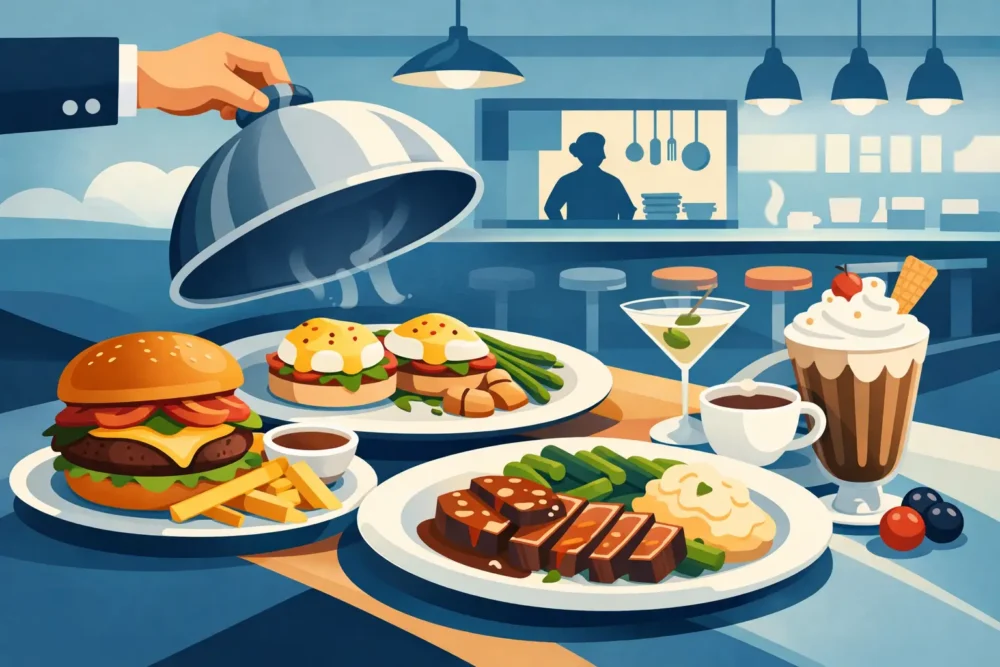
A stack of pancakes can be breakfast, or it can be the reason someone talks about breakfast for the rest of the trip. That difference gets to the heart of what makes diner food elevated: familiar dishes still feel easy to order, but every choice behind them – from the ingredients to the final garnish – is made with more intention.
Elevated diner food is not about making comfort food fussy. It is about delivering the flavors people crave with better products, sharper technique, thoughtful presentation, and the kind of hospitality that turns a casual meal into a memorable Sedona stop.
What Makes Diner Food Elevated Beyond the Plate?
The best modern diners respect the originals. A burger should still satisfy like a burger. Eggs should still feel like breakfast. Fries should still be worth reaching across the table for. The elevation comes from improving the experience without asking guests to decode the menu or sacrifice the relaxed, welcoming spirit that makes diner food so appealing.
1. Better ingredients create a better starting point
There is no shortcut around ingredient quality. Fresh eggs, properly baked bread, seasonal produce, well-sourced proteins, real butter, bright citrus, and flavorful herbs all show up in the finished dish. A simple salad becomes more compelling when the greens are crisp, the vegetables are at their peak, and the dressing tastes made for that plate rather than poured from a bottle.
Seasonal ingredients matter because they give familiar dishes a sense of place and time. In Sedona, that can mean a lighter, produce-forward lunch after a morning on the trail or a richer dinner that feels right after the desert air cools down. The menu can remain approachable while still changing with what tastes best now.
2. Chef-driven technique makes comfort food more precise
Technique is often the quiet difference between good diner food and great diner food. It appears in a perfectly poached egg with a tender yolk, a pancake that is golden at the edges but soft in the center, or a burger with a deeply caramelized crust and a juicy interior. These details are not flashy, but guests notice them with the first bite.
Chef-driven cooking also means building flavor in layers. Proteins may be brined, marinated, seared, roasted, or finished with a pan sauce. Vegetables may be charred for depth rather than simply steamed. Potatoes may be seasoned at several points in the cooking process, not just salted at the pass. The dish still arrives with diner-level comfort, but it tastes more complete.
That care is especially valuable in all-day dining. A restaurant serving breakfast, brunch, lunch, dinner, happy hour, and late-night food needs more than a broad menu. It needs consistent execution at every hour, whether someone is ordering coffee and eggs at the start of the day or a full dinner after an evening out.
3. Handcrafted sauces give familiar dishes a signature
Sauces are where a modern diner can show personality. A house aioli, smoky ketchup, herb vinaigrette, chile-forward glaze, tangy remoulade, or silky gravy can transform a dish without changing its essential appeal. A well-made sauce brings acidity, heat, richness, or freshness that keeps a familiar bite from feeling flat.
The key is balance. Too much sauce can hide the main ingredient, while too little can leave a dish dry or unfinished. The right sauce should make a crispy chicken sandwich taste brighter, a plate of roasted vegetables feel more indulgent, or a burger carry a distinct house character.
This is also where creativity should remain disciplined. A surprising flavor can be exciting, but it has to belong on the plate. Elevated diner food earns trust by making bold choices that still make immediate sense.
4. Presentation adds energy, not pretension
Modern presentation does not mean tiny portions or unnecessary decoration. It means a plate that looks as inviting as it tastes. Color, contrast, texture, and proportion matter because people eat with their eyes first, especially when a meal is part of a weekend getaway, a celebration, or a long-awaited catch-up with friends.
A generous plate of pancakes can be finished with fresh fruit and a thoughtful drizzle. A burger can arrive stacked neatly enough to enjoy without becoming a balancing act. A composed entrée can feel polished while still delivering the satisfying portion guests expect from American comfort food.
The trade-off is real: over-styling can make diner food feel distant. The goal is not to make a grilled cheese look like fine art. The goal is to make it look hot, crisp, generous, and impossible to ignore.
5. Menu flexibility makes the experience feel more welcoming
An elevated meal should work for the whole table. That includes the guest who wants a classic breakfast, the friend looking for a vegan option, the person who needs gluten-free accommodations, and the diner ready for a more substantial protein-forward dinner. Flexibility is not an afterthought. It is part of good hospitality.
A thoughtful menu offers real choices, not reluctant substitutions. Vegetarian, vegan, and gluten-free guests deserve dishes with the same care, flavor, and visual appeal as every other order. When accommodations are built into the kitchen’s approach, groups can choose a restaurant based on how good it sounds, not on who can find something to eat.
For travelers and locals alike, that range matters. The same table may include a hiker refueling after a red-rock adventure, a couple settling in for cocktails, and family members with different dietary needs. A modern diner should make all of them feel like the menu was designed with them in mind.
6. The beverage program completes the meal
A diner becomes more destination-worthy when the drinks are as considered as the food. Fresh coffee and a well-made brunch cocktail set a different tone than generic options. At dinner, a signature cocktail, local beer, thoughtful wine pour, or zero-proof drink can turn an easy meal into an occasion.
This does not mean every guest needs a cocktail. It means the restaurant recognizes that beverages shape the pace and mood of the table. A bright drink can complement a rich burger, a crisp mocktail can make lunch feel celebratory, and a late-night cocktail can extend a great evening without requiring a change of venue.
At Rascal Modern American Diner & Bar, that balance is central to the experience: bold, chef-driven comfort food paired with a bar program built for brunch, dinner, and the hours in between.
7. Service and atmosphere make quality feel effortless
The final element is the one guests remember long after the plate is cleared. Elevated diner food needs an atmosphere that is polished but relaxed, along with service that is attentive without hovering. Guests should feel comfortable arriving in hiking clothes, dressing up for date night, bringing a dog along when appropriate, or stopping by late when other full dinner options are limited.
Great service reads the occasion. Some tables want recommendations and a lingering meal. Others need a quick, satisfying lunch before the next plan. The best teams handle both with warmth, menu knowledge, and a genuine sense that every guest belongs there.
Elevated Does Not Mean Complicated
The beauty of modern diner cuisine is that it can meet people where they are. A guest does not need a special occasion to enjoy a carefully made breakfast, a standout burger, or a decadent dessert. But when the food is made with excellent ingredients, confident technique, and real hospitality, an ordinary meal can still feel like one of the best parts of the day.
Look for the small details on your next diner visit: the crispness of the potatoes, the balance in the sauce, the freshness of the produce, the care in the cocktail, and the ease of the room. Those details are what turn comfort food into something worth coming back for.